
Supplemental training should support climbing, not compete with it. If a workout leaves you too exhausted to climb well, then even a “good” exercise may be poorly prescribed.
The Hidden Load in Bodyweight Training
Bodyweight training looks simple because there are no plates on the bar.
That simplicity can be misleading.
When you add weight to a pull-up, the training change is easy to see. Five more pounds is five more pounds. The load is known. The progression is obvious.
Bodyweight movements are different.
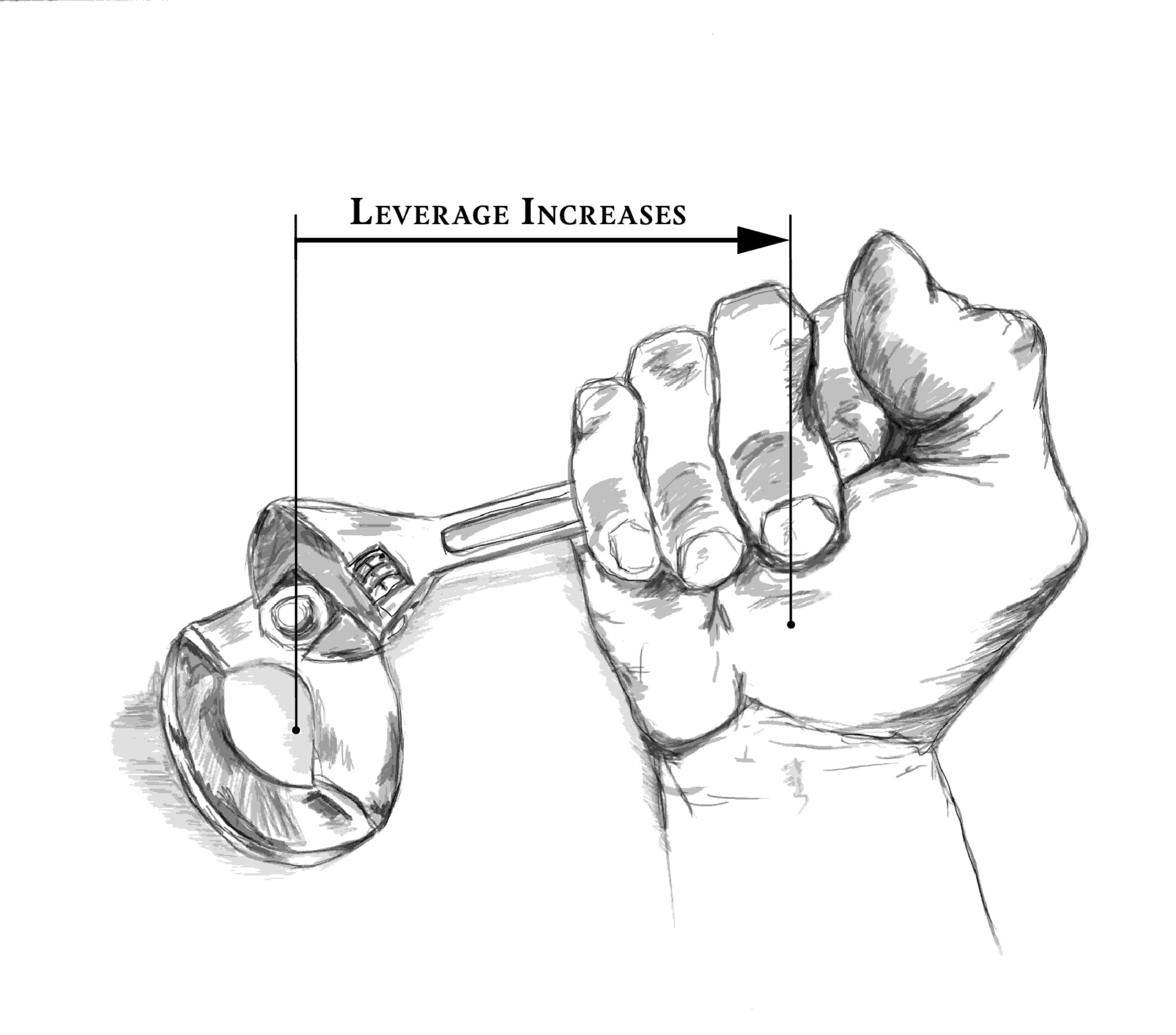
The difficulty often changes because of leverage. A small adjustment in body position can make a movement dramatically harder, even though your bodyweight has not changed at all.
That is why bodyweight training can be both useful and confusing for climbers.
The goal is not to collect more exercises. The goal is to choose movements that build useful strength without damaging your next climbing session.
That second part matters.
Supplemental training should support climbing, not compete with it. If a workout leaves you too exhausted to climb well, then even a “good” exercise may be poorly prescribed.
This is especially true with common core movements like leg lifts and knees-to-elbows.
Both can be useful, but they often become high-repetition fatigue workouts. A climber may perform rep after rep, feel plenty of burn, and still not create the kind of whole-body strength that transfers well to harder climbing.
A more useful question is:
Are you training fatigue, or are you training force?
For many climbers, the better choice is to reduce the volume and increase the force demand.
One way to do that is by holding the hardest position of the movement instead of moving through easier repetitions. A leg lift becomes much more demanding when the legs are held still at the top. Knees-to-elbows become more demanding when the finished position is held statically.
That is the beginning of the front lever family of movements.
The point is not that every climber needs to perform a full front lever. Most will not get there quickly, and some may not need to get there at all. The point is that front lever progressions give climbers a practical way to train whole-body tension.
And whole-body tension matters.
It is the glue between the hands and feet. It helps you keep pressure on small footholds. It helps you stay connected through steep terrain. It helps you hold positions long enough to solve difficult sequences.
In climbing, strength is rarely isolated. The body has to organize itself as one piece.
That is what makes static bodyweight progressions so valuable. They ask the body to produce force through a position, not just complete repetitions.
A simple progression might move from knees-up positions, to L-hangs, to tuck lever variations, to more extended lever positions over time. Each step becomes harder because the body’s position increases the leverage demand.
The external weight has not changed.
The force requirement has.
That is the hidden load in bodyweight training.
For climbers, this makes exercise selection important. High-volume bodyweight circuits can create plenty of fatigue, but fatigue is not the same as useful strength. If the goal is whole-body strength, the movement should be hard enough that quality matters.
A good strength effort is often brief.
A few controlled seconds in a difficult static position may be more useful than a long set of easier repetitions done mostly for the burn. The effort should be challenging, repeatable, and clean enough to preserve the training effect.
That does not mean volume has no place. It means volume should not be the default answer.
The better approach is to find a position you can barely hold with good form, train it for a small number of high-quality efforts, and use easier variations only as supporting work. Progress will usually be slow, but that is normal. Strength built through bodyweight leverage takes patience.
Twice per week is often enough for supplemental bodyweight strength work. More than that can interfere with climbing. Less than that may not provide enough repetition to make progress.
As always, the balance matters.
The workout should be difficult enough to create adaptation, but not so draining that it steals from the climbing you are trying to improve.
That is the bigger principle:
Bodyweight training is not automatically light training.
When leverage changes, the force changes.
Chapter 10 of Training Guide for Climbers: Thinking in Terms of Force Production explains the front lever progression in more detail, including how to choose the right starting position, how to prescribe static holds, and how to use bodyweight movements to build whole-body strength without turning supplemental training into junk mileage.
Because the goal is not to do more.
The goal is to produce more force where climbing actually asks for it.
Send me an email, and I'll get back to you as soon as I can.